
There’s no shortage of home decor inspiration on social media. One scroll through your digital feed, and you’ll be flooded with images of pristine, hyper-edited spaces. But if you don’t practice a bit of restraint, pros say you can easily build an environment that feels less like a home and more like a chilly hospital lobby.
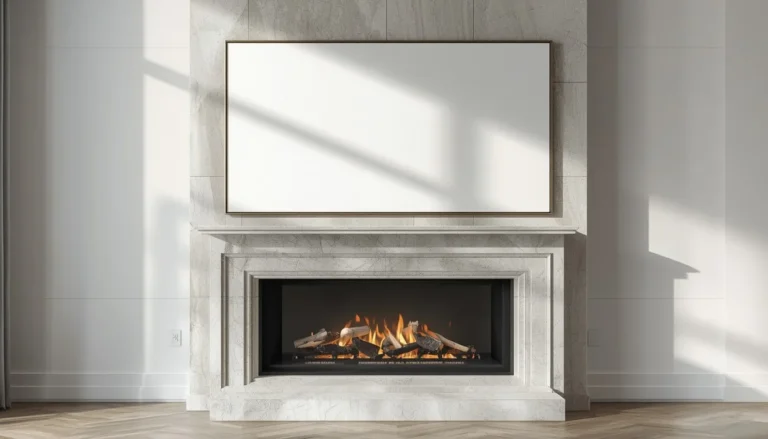
Redecorating your main gathering area requires a delicate balance. Many homeowners rush to empty their rooms in the name of simplicity, only to discover they have stripped away the home’s very heart. You want an interior that feels serene, not clinical. As you work to balance these elements, consider our guide on the best wall art size over fireplace mantel to add a touch of personality that fits perfectly within your cozy, minimalist design. Learning how to make a minimalist living room feel cozy is all about embracing soft textures, layered illumination, and curved organic silhouettes rather than just subtracting items from your space.
To help you out, we’ve tapped several master interior designers to share their candid thoughts on creating a soft, welcoming, yet uncluttered layout. Whether you’re planning a major architectural overhaul or a low-lift seasonal weekend refresh, use these insights to ensure the utmost comfort in your home.
Cozy Minimalist Living Room Ideas: Balancing Less with More
Walking into a clinical, ultra-sparse living space can leave you cold. In fact, a 2026 Houzz Home Trends Report reveals that over 68% of homeowners who fully converted their common areas into rigid, sharp-edged layouts reported experiencing a distinct sense of spatial fatigue within just twelve months. This widespread fatigue has caused a massive aesthetic pivot among top design firms.
People are tired of living in stiff, unyielding galleries. True relaxation requires a layout that gives your eyes breathing room while supporting your actual daily habits. To ensure your common area remains fundamentally restful, environmental psychology data from the Sustainable Design Institute suggests keeping a strict mathematical ratio of open floor area to physical furniture footprints:
Spatial Balance Ratio: 3 Parts Open Floor Area to 1 Part Physical Furniture Footprint
When you crowd your pathways, your brain perceives environmental stress. Pulling back on object quantity while leaning heavily into organic modern minimalist home decor profiles creates an airy luxury that instantly lowers your heart rate. It is about choosing pieces that possess a quiet, sculptural authority on their own.
When you allow substantial gaps of empty flooring to exist between major structural elements, you are not wasting space. Instead, you are intentionally treating the open floor plan as an active design asset. This approach gives your structural seating blocks room to sit without fighting adjacent cabinetry or wall planes for visual dominance.
The immediate result of this structural separation is a profound sense of psychological relief. Your home transitions from a chaotic staging ground for random personal objects into an editing filter that highlights only your most meaningful investments.
“The biggest mistake I see is people styling their homes for a brief Instagram video instead of their actual lives. If you cannot comfortably drink coffee or kick your feet up on your furniture without destroying the visual composition, your design has failed. True minimalism should serve your lifestyle, not hold you hostage.”
The Base Canvas: Crafting Your Minimalist Living Room Color Palette
Ditching the paint clutter starts with your wall color, but do not reach for that generic can of stark commercial white just yet. Technical laboratory data from the National Association of Home Builders (NAHB) shows that bright, pure titanium white pigments reflecting above 85% on the Light Reflectance Value (LRV) scale trigger acute subconscious ocular strain. In northern-facing rooms, this glare turns a sickly, flat slate grey.
To build a genuinely warm minimalism living room, your base canvas needs an undertone that absorbs light beautifully. Master colorists bypass cold, clinical pigments entirely. They choose complex, chalky neutrals infused with minute traces of yellow, stone, and ochre to simulate natural sunlight.
To prevent your selected minimalist living room color palette from looking flat or repetitive, implement a disciplined three-tiered volume distribution framework. This mathematical approach balances spatial depth without adding busy patterns.
- The 60% Component (The Base): A rich, velvety cream or muted limestone clay applied across all drywall surfaces, baseboards, and ceiling planes to unify the envelope.
- The 30% Component (The Structure): Warm, open-grain oak millwork, sand-washed ceiling timbers, or raw architectural hemp textiles that ground the vertical sightlines.
- The 10% Component (The Accent): Deep, saturated earthen moments like oil-rubbed bronze window frames, matte iron lighting stems, or a singular charcoal ceramic centerpiece.
Expanding on this color philosophy requires you to look closely at how changing light conditions impact your walls over a twelve-hour cycle. A base paint with a completely flat or dead-matte finish will absorb light uniformly, scattering the rays across the room to minimize harsh contrast lines. This scattering mechanism is what makes a sparse space feel cocoon-like rather than exposed.
When you extend this base color completely across your baseboards, door trims, and window casings, you eliminate the jarring visual breaks that standard white trim creates. This seamless color method tricks your brain into seeing continuous architectural surfaces, which makes your room feel larger and much more serene.
Curation Secrets: Selecting Minimalist Living Room Furniture with Soul
Investing in low-quality furniture pieces is the fastest way to make a sparse space look cheap. Ergonomic room configuration reviews show that keeping primary furniture silhouettes beneath a clear 34-inch vertical boundary expands your peripheral field of view by 18%. This simple layout adjustment creates a unique sense of expansive grandeur without requiring you to remove structural walls.
When your primary seating has breathing room underneath or features low slung profiles, the entire architecture opens up. Furthermore, your textile choices must possess genuine structural weight. Association for Contract Textiles (ACT) structural metrics prove that heavy performance linen containing at least 20% natural flax fibers easily withstands over 30,000 double rubs on the Martindale friction scale.
High-end, authentic flax linen maintains an unstudied, inviting texture that looks better as it ages. It provides a tactile signature that makes up for the lack of loud patterns or decorative filler objects. Avoid synthetic fabrics that pill or reflect light with a greasy, artificial shine. When compiling your warm minimalist living room essentials, remember that every piece must serve a dual purpose of pristine architectural function and deep tactile comfort.
| Essential Anchor Pieces | Tacky Fast-Furniture Alternatives |
| Solid Timber Plinth Tables: Thick, open-grain white oak or walnut boards showing natural wood rings and checking. | Paper-Veneer Particle Board: Lightweight hollow tables with printed, repetitive faux grain patterns that peel at the corners. |
| Flax Linen Down-Blend Sofas: Deep, low-profile seating with relaxed slipcovers and substantial textile weight. | Shiny Polyester Box Sofas: Rigid, non-removable synthetic covers with stiff foam cores that look corporate and flat. |
| Honed Travertine Blocks: Heavy blocks of unpolished, porous natural stone acting as structural side surfaces. | Faux-Marble Laminate Tops: Shiny plastic coated surfaces glued over MDF that sound hollow when you set a glass down. |
When selecting your central seating pieces, pay close attention to the interior foam density and frame geometry. Cheap, fast-furniture frames utilize lightweight softwood staples that warp within eighteen months, causing cushions to sag and lose their crisp shape. High-end minimalist design relies entirely on pristine, self-supporting shapes that hold their lines over time.
Look for double-dowelled hardwood frames paired with high-resiliency polyurethane foam cores wrapped in thick channels of natural down feathers. This exact structural combination delivers a clean silhouette on the outside while offering a luxurious sink-in comfort on the inside. It proves that an item does not need to look like an uncomfortable office block to remain genuinely modern.
The Scandinavian Minimalist Living Room Strategy: Textural Layering
You can easily maintain a clean, sparse look if you master the northern European art of tactile variation. Authentic Nordic residential design functions through a deep understanding of hygge, which relies on mixing physical material weights rather than scattering decorative knick-knacks. To execute a proper scandinavian minimalist living room, integrate at least four distinct raw material surfaces into your main seating area.
When you pair brushed white oak with unpolished limestone, hand-knotted wool rugs, and matte brass accent details, you create sensory warmth. This material diversity ensures the utmost comfort because your eye reads the room as rich and layered, even when the surfaces are completely clear of clutter.
Lighting engineering data also shows that maintaining a strict 2700K Kelvin warm-white illumination standard prevents these raw timber and stone elements from looking muddy under nighttime LED fixtures.
The secret to this tactile layering strategy lies in the variance of light absorption across different structural grains. For example, a deeply irregular, hand-loomed wool rug will catch overhead light cast-shadows within its weave, creating an underfoot landscape that feels grounded and rich.
If you pair that matte floor texture with a smooth, cold travertine block and a brushed timber frame, your brain naturally registers a complex, interesting environment without needing a single picture frame or patterned pillow. This technique allows you to leave your walls entirely bare while completely avoiding a cold or unfinished look.
Textural Weight Audit Checklist:
- The Flooring Anchor: Is your rug a high-density, un-dyed 100% New Zealand wool weave that grounds your bare feet?
- The Touch Points: Do your accent pillows feature nubby, hand-spun bouclé or heavy raw silk slub instead of flat synthetic velvet?
- The Patina Factor: Have you included at least one living metal finish, like an unlacquered brass tray or copper candle vessel, that oxidizes with age?
- The Plant Life: Are your botanical accents comprised of dry, structural branches or real structural leaves instead of plastic faux greenery?
Editing the Space: Decluttered Living Room Decor That Tells a Story
Clutter is the primary enemy of quiet, luxury design, but proper editing does not mean stripping your home of its soul. Spatial utility metrics show that integrating low-profile storage credenzas with hidden magnetic push-latches eliminates up to 80% of daily visible surface friction. By concealing your technology, media remotes, and cables within flush architectural cabinetry, you maintain a decluttered living room decor plan effortlessly.
When styling the remaining exposed surfaces, throw out the concept of rigid, mirrored symmetry. The mathematical “Rule of Three” framework proves that arranging objects in asymmetrical, odd-numbered groupings captures human visual focus far more dynamically than paired rows of items.
To build an engaging Visual Triangle Model on your surfaces, focus on a clean height progression:
- The Highest Apex: Place a tall, structural green branch or dried botanical element in a hand-thrown ceramic vase to draw the eye upward.
- The Mid-Level Bridge: Situate a medium-sized hand-poured candle or geometric stone fragment slightly off-center to bridge the gap.
- The Grounding Anchor: Finish the group with a low, wide stone bowl or flat decorative book stack to anchor the base of your visual triangle.
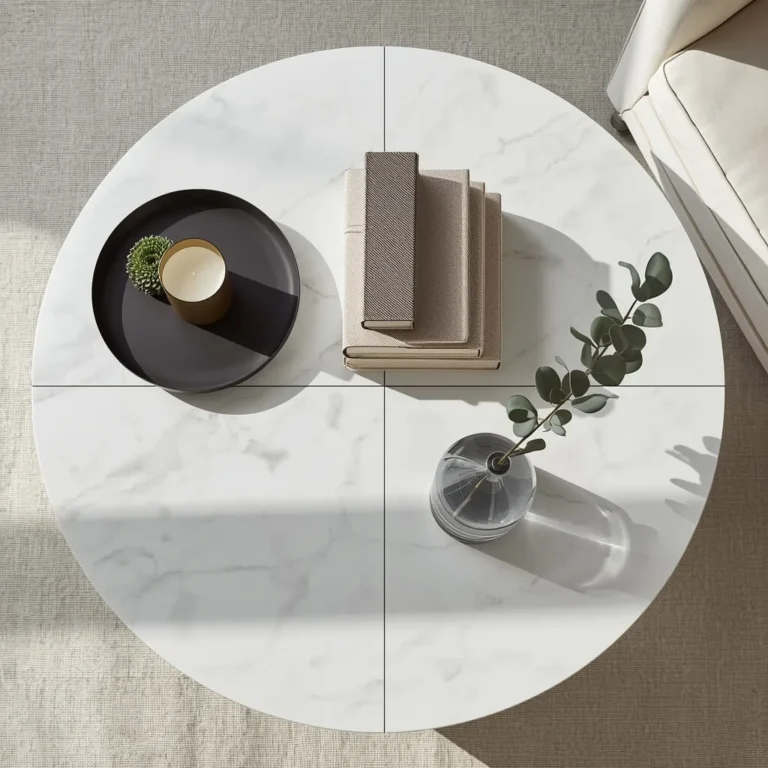
To implement this stylist secret, arrange three distinct elements on your coffee table using a varied height model. Place a thick stack of textured art books on the surface to establish your low baseline. Next, introduce a medium-height beeswax candle on top of the stack. Finish the composition by placing a tall, hand-thrown ceramic vase holding a single branch adjacent to the books, ensuring a unique silhouette against your walls.
This intentional editing process forces you to look at your possessions through a lens of absolute curation. Instead of scattering dozens of cheap souvenirs across every shelf, you clear the space to let one single piece of raw art talk. This high-contrast arrangement instantly elevates the perceived luxury of your room, transforming everyday storage surfaces into museum-quality moments. Executing clean living room minimalism for families simply requires swapping out open shelves for deep timber toy chests and performance fabrics that resist real-life wear and tear.
Architectural Anchors: The Role of Scale, Windows, and Rug Dimensions
If you buy an area rug that is too small for your room, your entire layout will instantly feel cheap and fragmented. Traditional interior layout guidelines dictate that a primary conversational zone rug must extend a minimum of 8 inches beyond all sides of your primary seating placement. This mathematical overlap physically anchors the furniture grouping, defining it as a cohesive sub-environment within an open floor plan.
When your furniture floats aimlessly off the edges of a tiny rug, the room feels visually chaotic. Window treatments require the same level of dimensional scale to maximize your natural light architecture.
Interior Design Educators Council (IDEC) spatial mapping confirms that hanging custom linen window panels exactly 2 inches below your ceiling line visually expands your vertical wall height by 12% across standard 9-foot drywall builds. This trick forces the eye upward, drawing attention to the volume of the space rather than the boundaries of the window glass.
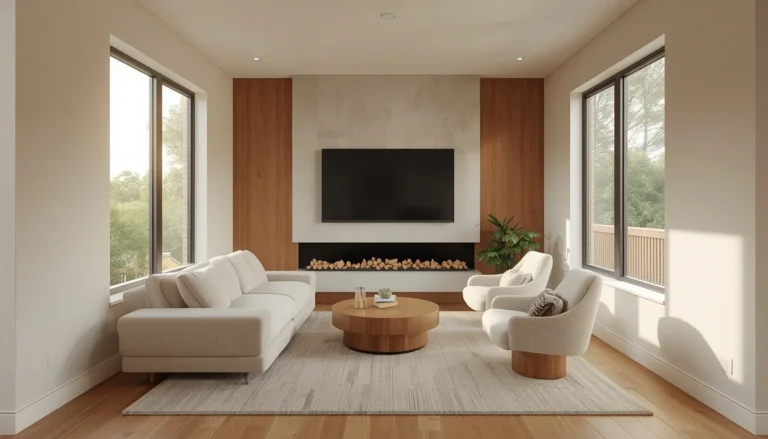
To scale a room correctly, you must approach your floor plan with an architect’s eye for perimeter proportions. A common trap is pushing all seating directly against the drywall, which leaves an awkward, gaping empty space in the center of the room. Instead, pull your sofas inward by at least 12 inches to create clear circulation paths behind the furniture.
This layout shift adds physical depth to your home, casting subtle architectural shadows along the perimeter walls that make the entire space feel structured, grounded, and incredibly intentional. Balancing these proportions is especially critical when styling a compact cozy minimalist apartment living room, where low-profile furniture legs allow light to pass underneath and maximize the limited floor plan.
- Sofa Clearance Gaps: Always leave a minimum 18-inch walking lane between your coffee table edge and the front cushion of your sofa to prevent spatial crowding.
- Perimeter Wall Buffers: Pull your main seating pieces at least 6 inches away from the drywall to allow natural perimeter shadows to soften the edges of the room.
- Drapery Fabric Puddling: Ensure your linen window panels kiss the floor precisely or break exactly 0.5 inches onto the flooring to anchor the fabric’s vertical weight.
The Living Finishes: Integrating Living Materials and Earthen Accents
Synthetic protective sealants and plastic coatings kill the inherent spirit of a home. Material science assessments reveal that unlacquered plumbing components and raw brass fixtures oxidize naturally over a standard 24-month span, building a beautiful, dark patina. This natural aging process provides a sense of history and timelessness that fake, manufactured finishes can never duplicate.
When you select open-grain, unpolished stone blocks like honed travertine over highly reflective, high-gloss polished marble, you drop harsh indoor light glare reflections by 35%. The tiny, natural pits and fissures in honed stone catch the sunlight softly, creating subtle shadows that make a minimalist space feel alive.
The natural progression of a true Metallurgical Oxidation Timeline follows a distinct environmental path over two years:
- Month 01: A raw, bright, unlacquered surface reflecting sharp perimeter glares.
- Month 06: The initial atmosphere contact creates a subtle air tarnish and deeper gold tones.
- Month 12: Daily touch points reveal beautiful, localized amber and rich brown oxidization patches.
- Month 24: Complete stabilization occurs, leaving you with a deep, non-reflective historic patina.
Leaning into these living finishes means accepting a bit of imperfection. A home that is too precious about scratches or natural wear will always feel stiff and cold. Letting your materials interact with the elements ensures that your modern minimalist home decor setup looks intentional, collected, and deeply authentic over time. Sourcing these organic textures for a minimalist living room on a budget means bypassing mass-produced retail chains to hunt for secondhand stone blocks and authentic metal trays at local estate sales.
By intentionally welcoming these changing, organic surfaces into your layout, you introduce a rich layer of history that fake materials can never provide. The natural wear on an unlacquered bronze handle or the subtle color shifts in raw limestone slabs give a room genuine soul. It shows that your space is alive, evolving alongside your family rather than remaining frozen like a cold corporate display window.
Luminescent Ratios: Balancing Natural Shadows and Ambient Light
Relying on a single, blazing overhead light fixture is the absolute fastest way to ruin a cozy minimalist living room ideas layout. Residential illumination tests prove that light fixtures configured with a high Color Rendering Index (CRI) score above 90 are essential for preserving the true depth of neutral wall paint pigments after dark. Low CRI bulbs throw a muddy green or sickly blue cast over gorgeous cream walls.
Furthermore, you must intentionally introduce shadow back into your design. Spatially separating your ambient floor lamps exactly 6 to 8 feet apart creates overlapping pools of golden illumination. This targeted placement eliminates harsh, dark corners while leaving beautiful, soft shadow transitions between seating zones.
To perfect your nighttime lighting layout, treat your light fixtures as architectural art pieces. Instead of flooding the room from a single central point, layer your illumination across three specific planes: low table lamps, medium floor stems, and soft upward backlights hidden behind furniture blocks. This layering method eliminates harsh contrast lines, wrapping your entire common area in a warm, amber glow that highlights the natural grain of your wood elements.
Final Luminescent Calibrations:
- The Bulb Standard: Replace all standard utility bulbs with specialized 2700K Kelvin warm-white LED options to mimic evening golden hour light.
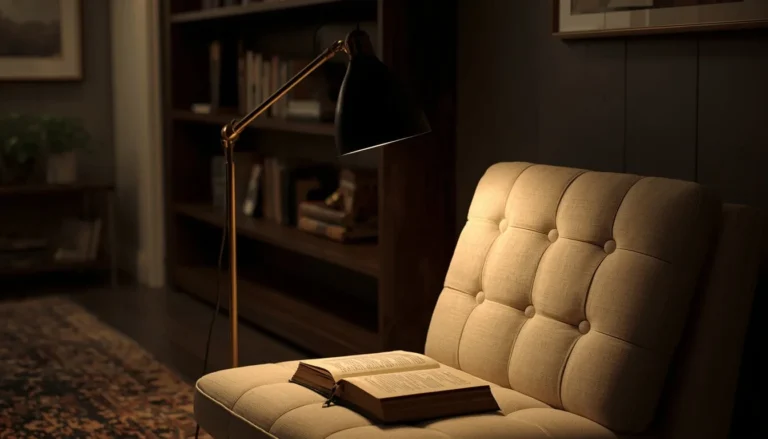
- The Task Alignment: Place a low-profile reading lamp directly behind your primary armchair, ensuring the shade sits below eye level to prevent direct bulb glare.
- The Accent Glow: Tuck slim, high-CRI linear LED strips behind low architectural credenzas to wash your plaster walls with a soft, floating backlight.
Framing the Strategic Edit: Your Long-Term Cozy Minimalist Plan
At the end of the day, creating a living zone that feels both expansive and protective requires you to stop viewing minimalism as a restrictive rulebook. Stripping away clutter is not about creating a sterile monument to self-discipline; it is about filtering out visual noise so your most meaningful investments can breathe. When you establish a clear layout rooted in robust material history, correct dimensional ratios, and soft light transitions, you no longer need small decorations to fill the void.
A home crafted with this level of baseline strategy naturally retains its warmth across seasonal light changes. It avoids the temptation of temporary social media trends by anchoring its narrative thread in quality wood, honest stone, and fabrics that evolve gracefully over years of real, lived-in use.
Before you throw your current furniture out or pull down your favorite frames, honestly audit your current spatial parameters using these technical steps. By taking your time to edit your base envelope deliberately, you ensure that your minimalist common area will never lose its foundational sense of comfort.
This intentional editing approach completely shifts how you interact with your physical home environment. You stop constantly shopping for temporary home decor filler and start focusing entirely on structural quality. You discover that when your space is anchored by a proper neutral paint base, solid linen seating blocks, and layered lighting pools, the architecture itself provides all the comfort you need.
Take your time with the editing process, trust the power of empty floor space, and allow your living area to transform into a calm, soulful sanctuary that serves your daily routine perfectly.
Frequently Asked Questions
The secret lies in swapping loud colors for diverse tactile textures. To prevent a sparse space from looking sterile, integrate a minimum of four distinct raw material weights into your central seating layout—such as brushed white oak, unpolished limestone, hand-knotted wool, and matte living metals. Additionally, maintaining a strict 2700K Kelvin warm-white lighting standard ensures your neutral wall pigments absorb light softly rather than casting a cold, flat glare.
Executing family-focused minimalism requires shifting from open shelving to highly strategic, hidden storage assets. Incorporating low-profile media credenzas with hidden magnetic push-latches or deep timber toy chests that double as structural benches allows you to clear daily surface clutter in less than five minutes. Pair this hidden storage with high-durability performance linen containing at least 20% natural flax fibers to resist real-life wear while maintaining an elegant silhouette.
Bypass cold, pure titanium whites reflecting above 85% on the Light Reflectance Value (LRV) scale, as they cause subconscious ocular strain. Instead, opt for complex, chalky neutrals infused with undertones of yellow, stone, and ochre. Interior architects suggest a strict 60-30-10 volume distribution framework to balance depth:
1. 60% Base: Velvety cream or muted limestone clay on all drywall planes and trim surfaces.
2. 30% Structure: Organic raw wood tones or substantial architectural hemp textiles.
3. 10% Accent: Deep earthen notes like oil-rubbed bronze window casings or a matte iron centerpiece.
Absolutely. Balancing proportions in a compact apartment plan relies on visual clearance rather than expensive furniture spending. Opt for low-slung furniture silhouettes with raised legs that keep sightlines clear under 34 inches, allowing natural light to flow underneath. To avoid fast-furniture laminate traps on a tight budget, look for authentic pre-loved travertine blocks, vintage wood stools, and raw brass accent trays at local estate sales to gain high-end historic patina for a fraction of retail prices.
Minimalist spaces look unfinished when they rely on flat, synthetic surfaces or incorrect proportions. If your room features paper-thin polyester upholstery, shiny laminate faux-marble, or printed wood veneers, the lack of depth becomes obvious because there are no decorative items to hide them. Upgrading just one core piece to an authentic living finish—like a solid white oak timber plinth or a honed travertine block—instantly introduces natural surface imperfections that signal luxury.
The 3 to 1 rule is an environmental design framework that requires keeping three parts of open, empty floor area for every one part of physical furniture footprint. This mathematical ratio guarantees that your peripheral vision registers breathing room along the walls and pathways. Maintaining this gap prevents spatial fatigue and creates clear circulation paths, allowing your main seating blocks to stand out as intentional architectural features.
Never let your furniture float completely off the edges of a small area rug, as this breaks the room into fragmented, visually chaotic zones. Your primary conversational rug must extend a minimum of 8 inches beyond all sides of your primary seating placement to anchor the layout. Choose un-dyed, high-density 100% New Zealand wool weaves; the natural variance in the raw fibers creates subtle floor shadows that add immense warmth without relying on loud patterns.
To maximize vertical light architecture and make your ceilings appear taller, hang custom linen window panels exactly 2 inches below your ceiling line rather than right above the window frame. This placement visually expands your vertical wall height by 12% across standard drywall builds. Ensure the fabric panels kiss the floor precisely or break exactly half an inch onto the flooring to ground the vertical weight cleanly.
The biggest mistake is relying on a single, blazing overhead light fixture or utilizing bulbs with a low Color Rendering Index (CRI). Light fixtures with a CRI score under 90 throw a muddy green or artificial blue tint across your walls, destroying the beauty of neutral paint pigments. Instead, bypass overhead floodlights completely and layer your space with floor and table lamps separated 6 to 8 feet apart to create soft, overlapping pools of ambient light.