

Bath Mats
A bath mat is usually the last thing people think about when designing a bathroom. It’s an afterthought. You pick one up because you don’t want to slip on wet tile, and you move on. But if you are treating your bath mat as just a functional sponge, you are missing a massive opportunity to ground your space. It is the first point of physical contact you have with your home after a shower. It should feel like a reward, not just a safety precaution.
Does your current mat look like a flattened, damp towel? Or does it provide a unique textural contrast to your hard flooring? To ensure your bathroom feels like a cohesive retreat, you need to stop buying “disposable” mats and start looking at them as foundational decor. Here is how to choose a piece that offers the utmost comfort while doing the heavy lifting for your room’s aesthetic.
Showing all 7 results
-
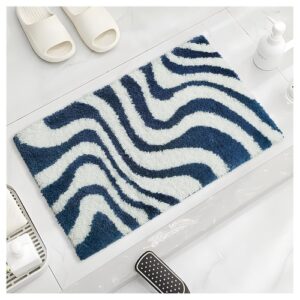
Decoriax Blue & White Geometric Bath Mat (24″ x 17″)
$60.00 -
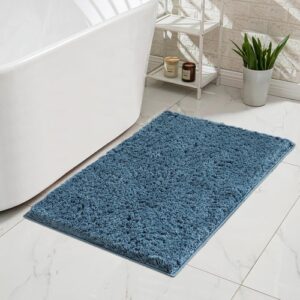
Decoriax Dusty Blue Bath Mat – Ultra-Soft & Non-Slip (2′ x 1’4″)
$75.00 -
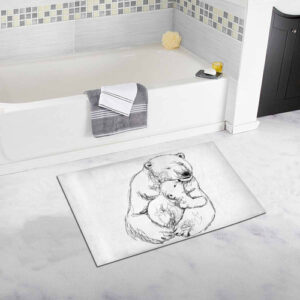
Decoriax Mama Bear Bath Rug – Ultra-Soft & Non-Slip (20″ x 32″)
$83.67 -
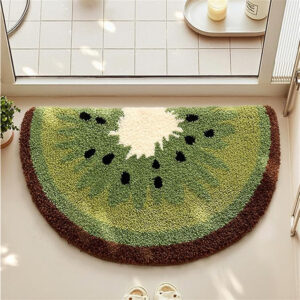
Kiwi Fruit Bath Mats Cute Bathroom Rugs, Particularly Absorbent
$38.00Select options This product has multiple variants. The options may be chosen on the product page -
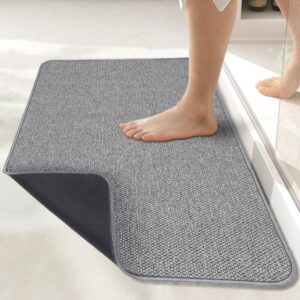
Low-Profile Non-Slip Bath Mat (Grey)
$58.00Select options This product has multiple variants. The options may be chosen on the product page -
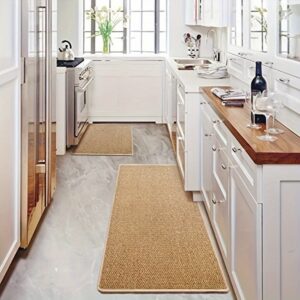
Super Absorbent Laundry Room Runner Rug (25″ x 95″)
$98.00Select options This product has multiple variants. The options may be chosen on the product page -
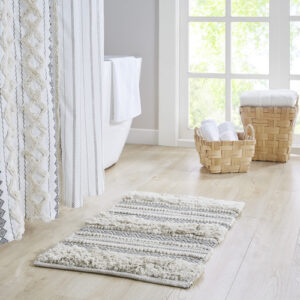
Woven Texture Stripe Bath Rug (Grey, 20″ x 32″)
$95.00Select options This product has multiple variants. The options may be chosen on the product page
Material Science: Beyond the Standard Cotton
Most people default to cheap cotton loops because they are easy to wash. While there is nothing wrong with a high-quality cotton mat, the world of bath decor has evolved. We are seeing a massive shift toward materials that offer more than just absorbency.
Think about diatomaceous earth mats. These are “stone” mats that feel dry to the touch within seconds. They are architectural, minimal, and don’t get that “staged to death” soggy look after one use. On the other end of the spectrum, you have high-pile microfibers and memory foam. These aren’t just mats; they are clouds for your feet. The material you choose dictates the “reset energy” of your morning routine.
The Scale Factor: Why Size Actually Matters
One of the biggest mistakes in bathroom decor is buying a mat that is too small. A tiny mat floating in the middle of a large floor looks like a postage stamp. It feels “try-hard” and out of proportion. To make your bathroom feel expensive, you need to match the scale of your vanity or tub.
If you have a double vanity, don’t use two small mats. Use one long runner. It creates a continuous visual line that makes the room feel wider and more grounded. It’s a simple shift in strategy that yields a huge ROI on the overall vibe. When the rug fits the space perfectly, the whole room feels “not-staged to death” but actually designed.
Texture vs. Pattern: The Visual Weight
In a room full of hard, shiny surfaces—think tile, glass, and porcelain—the bath mat is your best tool for adding warmth. Instead of looking for loud, colorful patterns that will age poorly, focus on the weave. A heavy popcorn texture or a subtle waffle-weave provides visual interest without cluttering the eyes.
Why does texture win over pattern? Because texture is timeless. A tonal, textured mat in a moss green or a deep slate provides a “unique” depth that a flat printed pattern can’t match. It makes the floor feel like a deliberate part of the design rather than just a surface you walk on. It’s about building layers of material interest.
Maintenance and Longevity: The Reality Check
Let’s be real: a bath mat that is impossible to clean is a bad investment. Since this is a high-moisture environment, you need a mat that can handle the humidity without becoming a science project. This is where high-quality construction comes into play.
Look for mats with a breathable backing. Avoid the cheap rubberized bottoms that crack in the dryer and trap moisture against your floor. A mat that allows for airflow will stay fresher longer and ensure your bathroom stays hygienic. It’s not just about the look; it’s about the long-term utility of the piece.
Color Strategy: Grounding the Room
Your bath mat shouldn’t “pop” in a way that feels jarring. It should anchor the room. If your bathroom is light and airy, a mat in a slightly darker, grounded tone can prevent the space from feeling like it’s floating away. Think of it as the “heavy lifting” for your color palette.
Deep, saturated tones like charcoal, navy, or terracotta are excellent choices for 2026. They hide the occasional footprint and provide a sophisticated contrast to white or light-grey tiling. When the color feels intentional, the whole room feels more like a “Sunday reset.” It’s a small detail, but it’s the one that ties everything together.
The Final Touch: Placement with Soul
Where you place your mat is just as important as what it’s made of. It shouldn’t just be shoved against the tub. Pull it out an inch or two. Align it with the center of your fixtures. This creates a bit of “breathing room” for the design.
A bathroom is a place of transition. The bath mat is the bridge between the water and the rest of your day. By choosing a piece that offers the utmost in both style and substance, you turn a utility item into a statement. Don’t settle for a cold floor. Build a space that actually works for your life, starting from the ground up.
Frequently Asked Questions
What is the best material for a quick-drying bath mat? If you want to avoid a damp floor, diatomaceous earth is the gold standard. These stone-like mats absorb moisture and evaporate it in seconds, keeping your aesthetic minimal and clean. For those who prefer a softer touch, high-grade microfiber or waffle-weave cotton offers great absorbency while allowing for better airflow than standard loops.
Should I use a bath runner or a standard mat? It all comes down to the scale of your fixtures. If you have a large double vanity or a freestanding soaking tub, a single long runner is a pro move. It creates a continuous visual line that anchors the room. Standard mats are fine for smaller footprints, but a runner prevents the space from looking “staged to death” and disjointed.
How do I prevent my bath mat from sliding on tile? Safety is a priority, but you should avoid cheap, glued-on rubber backings that crumble in the wash. Look for mats that utilize a separate silicone non-slip pad or those with a high-quality “grip” weave. This allows the mat to stay breathable and stay in place without trapping moisture that can damage your flooring.
Can a bath mat actually change the mood of the bathroom? Absolutely. It is the largest piece of textile on your floor and acts as a visual anchor. Moving away from clinical whites toward grounded, saturated tones like charcoal or terracotta provides a “unique” depth. It transforms the bathroom from a utility closet into a space with a specific “Sunday reset energy.”
How often should I wash my bath mat to keep it fresh? To keep your sanctuary hygienic, you should wash your mat every one to two weeks depending on household traffic. Always hang it up after use to ensure proper drying. Choosing a mat with a durable, high-quality construction allows it to survive frequent laundering without losing its texture or becoming a “try-hard” flat mess.